Sunday, October 11, 2015

City of thieves, David Benioff

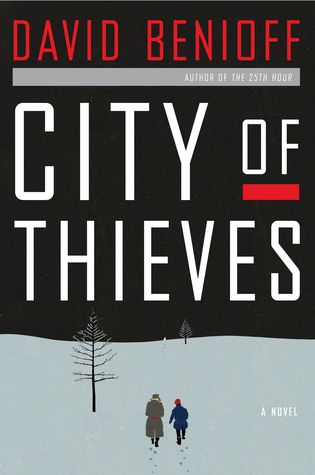
City of Thieves"City of thieves" is a wonderful, fun and horrific story based in 1941 Leningrad, a time and a place where you would not want to find yourself. Not even for a minute.

In the hands of the local police, instead of being executed, two young boys are given a shot at saving their own lives by complying with an outrageous directive: secure a dozen eggs for a powerful Soviet colonel to use in his daughter’s wedding cake. In a city cut off from all supplies and suffering unbelievable deprivation, Lev and Kolya embark on a hunt through the dire lawlessness of Leningrad and behind enemy lines to find the impossible.

The book is written in a KenFollettish adventure style - which is not a bad thing, it's just a fast-paced, action-filled style - and it's unbelievably engrossing. The historic background is also very credible and well-researched.

Charming and delicate at times, but mainly dark, grim and repulsive, like a story about the siege of Leningrad should be. There is some real horror in this story, the stuff of urban legends, and despite I'm sure it all happened (and worse) during the II World War, the author seems to aim a little too carefully for the reader-shock effect. But he also infused the novel with a lot of sense of humor, and a good number of heart-warming scenes.


The greatest thing about "City of thieves" is perhaps the dialogue: it's so vivid and alive. Benioff is an accomplished screenwriter (he wrote many if not all episodes of Game of Thrones), and I think you can hear that in the way he masters each character's unique voice. He also has a special skill at setting up exciting scenes where the stakes are raised and the tension is high. Unfortunately, among a lot of good work that he authored, he also wrote one of the very worst movies I've ever seen : "Troy". A rare opportunity to bring the heroes of ancient Greece alive on the silver screen, completely and utterly wasted and gone to the dogs. Although, to be fair to Benioff, the main problem with that movie was the dreadful casting. But that's another story. This novel is so worth reading.

Finally, I have to say I listened to the audiobook, read by Ron Pearlman. He's got a great baritone voice, and his Russian accent is realistic. His intonation and expressiveness were great when he read the dialogue, a bit less so when reading the narrating voice, where his tone verged on the "tough guy" side, without the need to do that.

Gilead, Marilynn Robinson

Gilead (Gilead, #1)Although a work of literary fiction, this is probably the best book about God and the Christian Faith that I've ever read. It achieves what "The experience of God" by David Bentley Hart does, and then it surpasses it, by acknowledging the presumptuousness of anyone who tries to judge anyone else's faith.

Gilead (winner of 2005 Pulitzer for fiction) is written as a letter from a 76-year-old Congregationalist Preacher, John Ames, to his seven-year-old son. The pastor has been given only a few weeks to live by his doctor, and he writes down his thoughts in the hope that his son will read them in the future. This is really a fictional vehicle for the author to offer a splendid meditation on life and death and faith.

This rare thing happened to me while reading Gilead: at first, I couldn't stand it. Once I was about half way through, I started to flat out love it, and by the end I loved it even more, as it's a book that resonates with me in an almost perfect way. I heard that other readers also took some 50-70 pages before warming up to it. 


Initially I couldn't stand the main character, his "I made myself so happy by having you, my 7 year old son, but I'm so sorry I'm not leaving you any money at all, because I am 77, dying and broke". While on one hand he was complaining that he didn't have any money to pass on to his son, on the other he was idolizing his grandpa, who used to bully his wife into giving away all their money and possessions to anyone who asked. Typical human conflict, and typical struggle with money of every idealistic man, who doesn't want to get his hands dirty with the "dung of the Devil", except for when he needs it (can't live with it, can't live without it). In a fictional character, this doesn't make him particularly likable. But the truth is, I was too quick to judge John Ames.

Gilead is a book so full of depth, wisdom and poetry that by the end of it I was in awe. It also contains a lot of Christian theology and explicit and implicit references to the Bible - in particular, to the parable of the prodigal son - but none of that is presented in a preachy or academic tone. And certainly this is not a "book for Christians", as the tone is very open to a universal spirituality (for example: John Ames never mentions Jesus, only God).

In his balanced, slow-paced letter-style monologue, the main character also addresses atheism, and the thoughts of Feuerbach, Hegel, Calvin and other fine minds. His voice feels genuine, coming from the heart, and I'm sure the author often speaks her own mind through John Ames. You can tell that not only Marilynn Robinson means what her main character is saying, she also has clearly given these matters a lot of thought and study, and yes, I admit that, selfishly, seeing her thoughts on religion align perfectly well with mine helped me enjoy the book even more (I am catholic and the author comes from a Congregational church, but that makes zero difference to me).

Above all, it's so rare to find great depth and great positivity mixed together in the same book (or in the same artist / writer / person). It's much more common to find depth and desperation, or a happy superficiality. That's what makes Gilead such a treasure, its profound and optimistic wisdom.

Some reviewers found Gilead boring because there is "no plot". That's not exactly the case, but I can understand that if you are looking for a plot-driven book, this is not a title for you.

Gilead is much larger than its characters and much larger than the events that are being narrated.
As I mentioned above, Robinson used the vehicle of fiction to express some very deep and heartfelt points about faith and religion. In my opinion, her greatest achievement in Gilead is that she succeeds in painting Christianity at its best. Christianity as a living, real thing, as opposed to a bunch of mindless dogmas. Christianity as a way of living, with all its messiness, contradictions, failures and struggles. But also, Christianity as seen from a very wise, positive and self-aware point of view. In fact, I found many thoughts and ideas in this book that seemed to come straight from St Augustin (whom I consider "Christianity at its best" when it comes to thinking).

Here is John Ames, the old pastor, writing about religious self-righteousness:

"People of any degree of religious sensitivity are always vulnerable to the accusation that their consciousness or their understanding does not attain to the highest standards of the faith, because that is always true of everyone. St Paul is eloquent on this subject. But if the awkwardness and falseness and failure of religion are interpreted to mean there is no core of truth in it, then people are disabled from trusting their thoughts, their expression of belief, and their understanding, and even from believing in the essential dignity of their and their neighbors' endlessly flawed experience of belief. It seems to me there is less meanness in atheism [than in religious self-righteousness], by a good measure."

And here's an excerpt from an interview with the author:

Interviewer: "Is GILEAD on some level a novel about “being Christian,” about what it might mean to live a Christian life?"


Robinson: "I think I can guardedly say yes. The fact is, being who I am, my definition of human life is perhaps not readily universalized. But I hope that it is not a narrow view of human life itself. I don’t have the feeling that people need to be Christian in order to understand what the novel is and what it means and so on, to recognize it’s about father-son relations, or parent-child relations. In the New Testament, of course, that’s the major metaphor for the situation of a human being in the world relative to God. I think that, in using that metaphor, the New Testament is appealing to something that people profoundly and universally know: what it is to love a child and what it is to love a parent. So that’s a big subject in the book."

Monday, August 24, 2015

Jack Glass, Adam Roberts

Jack GlassWhat a splendid thing this book is. Inside and outside. Full disclosure: as an experiment, I bought this book ONLY because I loved its cover. I didn't read anything about the content or the author, I carefully avoided reading the cover blurb, and jumped into it in complete ignorance.

I have a very visual imagination and I've loved many book covers before, but I've never bought a book just because of its cover, this was the very first time for me. A complete gamble. And I'm glad it paid off so well!

So, just for a second, take a look at this cover. Not only its intricately crafted stained glass drawing is very beautiful in itself, it also:

1). succeeds in evoking a certain complexity in the plot / content, therefore attracting thinking readers;
2). it works wonders on a tablet or computer screen: the back-lit surface of your device screen will give this cover an even more credible "transparent glass" effect. This cover, in summary, is just a marvel to look at. It deservedly won the BSFA award for "best SF book cover". 


Adam Roberts loves Science Fiction. In a brief TED talk, he said: "Science Fiction is not similar to poetry, science fiction is poetry". So, no surprise there, Jack Glass is a Science Fiction book. In the author’s own words, the novel is a collision of ‘the conventions of ‘Golden Age’ Science Fiction and ‘Golden Age’ detective fiction, with the emphasis more on the latter.

The book is divided in three stories, all connected and all taking place in the same world.

From the start, we know from the narrator that the murderer in each story is Jack Glass, but that's all we know. The mystery lies in Jack's true identity, and in why and how he committed these murders.

The first story blew my mind. It was actually reminiscing of some Golden Age SF. Big Ideas SF. It's dark, intense, full of ideas and horrific, heavy moments.

With the second story the writing's tone shifts completely (maybe a bit too much?), introducing new important characters and, finally, providing a big picture overview of the universe where these stories are taking place. In a sense, you can see the first story almost as a prologue to the book. With the second story, Roberts is much heavier on the detective fiction. Yes we are still in a distant future, but it really feels like reading an Agatha Christie or Arthur C. Doyle story. And that is a good, fun, exciting thing. You can certainly feel the playfulness and the joy that Roberts was feeling while writing this book.

One could say that the main difference with a Sherlock Holmes story is that this one takes place in the future, and therefore it will be much easier for the author to come up with a clever resolution and make it seem oh-so-obvious, because he knows things about this world that the reader does not know. But I would counter that argument by noting that many of the Christie or Doyle stories, although firmly based in the present reality (of their author), used very similar deus-ex-machina devices to resolve everything at the end, and to make the reader feel like he had the obvious solution in front his eyes the whole time, and that he was a fool not to spot it.

The third story, "The impossible gun", sums everything up and brings us to a slightly deeper appreciation of Jack Glass as a complex character, and of his background.

Look, "Jack Glass" is just a load of intelligent fun. It's inspired by works from the Golden Age, but it's very original at the same time, and very well written. Does it lose a little bit of momentum at some points? Maybe it does, especially during the second and third story. Is it a bit too cold in its intricate plot? Again, maybe, but deep and involving character development is not the point of this book.


Maybe it's not a perfect book, but it deserves 4 stars and a half from me for the fun that I had reading it, and for the uncommon level of mental stimulation that it can generate.

SF author Paolo Bacigalupi wrote a very positive review of this book, wondering why an author of Adam Roberts' talent has not won any of the big SF awards yet (he did win the BASF award for Jack Glass though). And Bacigalupi finds his own answer in the fact that Roberts is a unique, very unconventional writer, who focuses on the Big Idea for each one of his books, and then moves on to something completely different. A serial experimenter. While it's much easier - and profitable - in these days, to strike gold with a more or less original concept, and then cash in on the series, and keep writing about the same characters. That might very well be true.

Tuesday, August 11, 2015

Limbo, Melania Mazzucco - Literature as a slap in the face

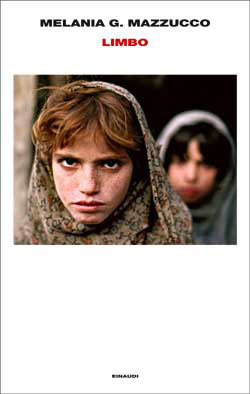
LimboMelania Mazzucco is the best contemporary Italian writer I know. She is an author "with balls", writing with the ferocity of Edward Bunker and the raw depth of McCarthy. Make no mistake: behind the elegant style, the masterful architecture, the perfect ear for each voice and the accuracy of the details, there is a wild beast that pushes to the maximum to get right into our most intimate essence of being human. The truth in her novels is outlined with a vivid and brutal force, although beautifully controlled by a master of her craft.

No bullshit. No judgements. Just life. Reality. Naked humanity.

I don't read her novels for the topics they cover anymore: in fact, I do not care to read about a gay couple adopting a child (the theme of her latest novel). But I already know that I will read that book anyway, because now I am addicted to that voice, so powerful and brutal. There are not many like it in the international literary scene.

Let me try to explain: whereas an average writer manages to immerse the reader into a character's thoughts and soul, leaving the reader with a certain feeling of comfort, a certain sense that what you are reading is helping you escape your reality, and it has not much to do with yourself and your life, Mazzucco will slap you in the face, yell "Wake up!", grab your hair and drag you into the character, and when you feel like you've touched the bottom, she will make you dig even deeper, to feel the the character's humanity under every aspect, including the physical one, her body, her armpits, her hair, her biological functions. Until the individuality built in the novel becomes almost more vibrant and palpable than the real-life people who are close to you, your family.

In other words, while reading this author you will often have moments when you find yourself saying: "Oh shit, this is me. It's talking to me here".

What I'm talking about is literature. Real literature, vs any light-weight novel that is out there.

This is a novel about an Italian woman who enlists in the army, fights in Afghanistan as a sergeant, is wounded and lives his rehabilitation in Ladispoli as in a limbo, neither alive nor dead. There she meets a man who finds himself in limbo too, albeit quite a different one. It's clear that the ways of writing this novel and make it a horrible, illegible brick are endless. Indeed, we can say that the plot does not do much to attract your interest when summarized in this way. 

But unlike a novel that I would not consider literature, in "Limbo" the language and the narrative form are not tools used to embellish reality or to make it more pleasant, nicer, or more tolerable. 

Melania Mazzucco loves raw: raw reality, raw characters.

Language is essential, focussed, practical. It becomes a tool that the author uses to sharpen the senses of the reader and encourage you to see reality with eyes open wide, throwing beams of bright light onto corners of life that are in the dark or that we keep ourselves in the dark for fear of looking at what's there.

I believe there is nothing better or more useful that literature can do. To be a slap in the face. Wake up the reader, even if only for an hour or two.

Here's what I mean when I say "vivid" and "brutal": Mazzucco's approach to writing is that of a fighter in a ring: fearless. As a writer, she is not afraid of anything. There is no beautification, no makeup, no eye shadow or blush. There is, however, a constant attention to the poetry of the real things - and to the poetry of language (or you would you watch a documentary or you would read a report instead).

Examples: "The waves continue to graze the sand." The description of a sunrise rising, viewed from the bottom of a canyon in Afghanistan: "There was a smell of cordite and smoke. The sun was drawing a yellow patch on the mountain's highest tooth. The light was walking fast on the rocks, the shadow regressed ".

Clearly, in the hands of a writer of this caliber, any narrative line becomes a corollary to what is the true heart of the novel. Sure, it is very interesting to read of an Italian female soldier in Afghanistan, butit is not the story what's most important. It's the voice. The author's personality. It's this, I think, that Alberto Asor Rosa means when he says that "Melania Mazzucco's books are life itself." It is no daring hyperbole. It's true: these are not regular novels, they are a voice that gets into your bones, and that makes you look at yourself as you really are.

I read Alberto Asor Rosa's review in the newspaper La Repubblica, and his comment that "the political-historical judgment runs behind the compact facade of the book, we can guess." I completely disagree with that. What is the political stance? Pacifism? Feminism? No no no, there's none of that within the core of this novel. Indeed, part of the strength of this book is its total lack of judgment on the part of the novel itself, while various judgments are given by the characters. On this point, therefore, I do not agree with Asor Rosa (aka Novel Levon or Radar Radar). 

I firmly believe in Sturgeon's Law, for which "90% of everything is crap", especially when applied to the world of modern publishing world. Such wonderful and important novels are likely to be mixed, on the shelves of a bookstore, with all the crap that is printed and sold these days. Limbo is in the 1% of that remaining 10%. Trust me.
Limbo, Melania Mazzucco (Italiano) - La letteratura come schiaffo

LimboMelania Mazzucco e' la migliore scrittrice italiana che io conosca. E' un'autrice con le palle, che scrive con la ferocia di Edward Bunker e la profondità cruda di McCarthy. Che sia chiaro: dietro lo stile elegantissimo, l'architettura magistrale, l'orecchio perfetto per ogni voce e l'accuratezza dei particolari, c'e' una bestia feroce che spinge al massimo fin dentro al punto piu' intimo della nostra essenza di esseri umani. La verita' nei suoi romanzi assume contorni vivissimi e una forza brutale.

No bullshit. Niente cazzate. Niente opinioni. Solo vita. Realta'. Umanita' nudissima e crudissima.
 

Il suo "Vita" e' splendido, ma e' "La lunga attesa dell'angelo" che mi ha lasciato letteralmente a bocca aperta, non credevo che lo si potesse scrivere, un libro cosi' vivo.

A questo punto, non la leggo piu' tanto per gli argomenti che tratta o per le storie che racconta: tanto piu' che non mi interessa leggere di una coppia omosessuale che adotta un bambino (tema del suo ultimo romanzo). Tutto lascia pensare che si sia finalmente lasciata andare alla tentazione di saltare nel dibattito politico, del dire la propria, in un'Italia divisa fra difensori ad oltranza della famiglia (a destra) e relativisti per cui tu il tuo sesso te lo scegli, non ci sei nato (a sinistra). Ma so gia' che il libro lo leggero' lo stesso, perche' ormai ho il bisogno fisico di leggere quella voce cosi' potente e brutale. Non se ne trovano tante nel panorama letterario internazionale. E poi ho l'impressione - e spero - che abbia scelto quel tema perche' era alla ricerca di nuovi orizzonti narrativi da esplorare, e non perche' voleva un argomento politico per il quale schierarsi.

Cerco di spiegarmi: mentre uno scrittore mediamente bravo riesce ad immergere il lettore nei pensieri profondi e nello spirito di un personaggio, e lascia al lettore una certa liberta', o una sensazione di comodita' nell'immaginare un personaggio e farlo proprio, la Mazzucco senza che tu te ne accorga ti da' uno schiaffo, ti dice "sveglia!", ti prende per i capelli e ti trascina dentro al personaggio, e quando ti sembra di toccare il fondo, ti porta a scavare ancora piu' in profondita', a sentire fisicamente il corpo del personaggio, le ascelle, i peli, il sesso, le funzioni biologiche. Fino a quando l'individualita' costruita nel romanzo diventa quasi piu' vibrante e palpabile delle persone che ti stanno accanto, dei tuoi familiari. 


In altre parole, questa non è una lettura di evasione, e neppure un libro di denuncia o di quelli che fanno inorridire per cercare di mandare un messaggio. No, in Limbo il lettore si sente preso in causa, coinvolto nel profondo, proprio come dovrebbe essere quando parliamo di vera e propria Letteratura. 

Ecco, in una parola: profondità. Una qualità di un romanzo che non si può misurare scientificamente. Tanto che qualcuno legge Baricco e si azzarda a dire che è "profondo". Ah! Bella questa. Il vanaglorioso re dei superficiali. Be', lasciamo stare. Ecco, Melania Mazzucco è il contrario di Baricco: è un'autrice profonda. Qualsiasi argomento ci presenti.

Questo e' un romanzo su una donna italiana che si arruola nell'esercito, combatte in Afghanistan come maresciallo, viene ferita e vive la sua riabilitazione a Ladispoli come in un limbo, ne' viva ne' morta. Qui conosce un uomo che e' in una specie di limbo anche lui, se pur molto diverso. E' chiaro che le maniere di scrivere un romanzo cosi' e farlo risultare un orribile, illeggibile mattone sono infinite. Anzi, diciamo pure che la trama non promette bene, quando la leggi riassunta cosi'.

Ma a differenza di un "romanzo qualunque", qui il linguaggio e la forma narrativa diventano strumenti non usati per abbellire la realta' o per renderla piu' piacevole, simpatica, o tollerabile. Sono, al contrario, strumenti che l'autrice usa per acuire i sensi del lettore e stimolarlo a vedere la realta' con occhi piu' aperti, a gettare fasci di luce abbagliante su angoli della vita che sono in ombra o che noi stessi manteniamo nell'ombra per paura di guardare cosa c'e' li'.

Credo non ci sia niente di meglio, o di piu' utile, che la letteratura possa fare. Essere uno schiaffo. Svegliare il lettore, anche se solo per un'ora o due.

Ecco cosa intendo quando dico "feroce" e "brutale": la Mazzucco scrive con i controcoglioni, non ha paura di niente. Non c'e' abbellimento, non c'e' trucco, ombretto o fard. C'e', pero', l'attenzione costante alla poesia delle cose vere - e del linguaggio (altrimenti ti guarderesti un documentario o ti leggeresti un reportage).

Esempi: "la grana scettica della voce". "Le onde continuano a brucare la sabbia". Oppure la descrizione di un'alba nascente, vista dal fondo di una gola in Afghanistan: "C'era odore di cordite e fumo. Il sole disegnava una chiazza gialla sul dente più alto della montagna. La luce camminava veloce sulle rocce, l'ombra regrediva".

E' chiaro che, in mano ad una scrittrice di questo spessore, qualsiasi narrazione diventa un corollario a quello che e' il vero cuore pulsante del romanzo. Certo, e' molto interessante leggere di una donna soldato in Afghanistan, ma non e' la storia la cosa piu' importante. 


E' la voce. La personalita' dell'autrice. E' questo, credo, che Alberto Asor Rosa intende dire quando dice che "i libri di Melania Mazzucco sono la vita stessa". Non e' un'iperbole azzardata. E' vero: non sono storie, non sono romanzetti, e' una voce che ti entra nel midollo, e che ti fa fare i conti con te stesso.

Ho letto la recensione di Asor Rosa su Repubblica, e un commento che lui fa è che "il giudizio storico-politico corre dietro la facciata compatta del libro, possiamo indovinarlo". Non sono affatto d'accordo. Anzi, parte della forza del romanzo è proprio l'assenza totale di giudizio da parte del romanzo stesso, mentre i giudizi vengono dati dai vari personaggi. Su questo punto, quindi, non sono d'accordo con Asor Rosa (detto anche Onip Pino).

Credo fermamente nella legge di Sturgeon, per cui "il 90% di tutto e' merda", soprattutto quando applicata al mondo dell'editoria moderna. E quindi mi dispiace un po' che questi romanzi cosi' meravigliosi e importanti rischino di confondersi, sugli scaffali di una libreria, con tutta la merda che si stampa e si vende di questi tempi.

E scusate per il mio, di linguaggio, ma spero di essere riuscito a comunicare la mia passione per questa scrittrice

Friday, July 31, 2015

Kirinyaga, Mike Resnick

http://images-eu.amazon.com/images/P/034541702X.02.LZZZZZZZ.jpgHoly Mother of Arthur Clarke, I loved this book. I've kept recommending it to friends as a "best kept secret" or "hidden treasure" since I've read it. It is a stunning, intelligent, profound, and unique collection of short stories, even though it reads more like a novel because each story is set more or less in the same location and with similar characters.

Kirinyaga is the "most honored book in the history of science fiction", based on the fact that each story was nominated and won many prestigious awards. And deservedly so.

The novel / collection is based on a simple but powerful concept: an elderly Kenyan rich man, Koriba, leaves Earth to live on a chartered, terraformed planetoid called Kirinyaga, where he reverts to the old ways of the Kikuyu, after realizing that the old Kikuyu culture in real Kenya has been fatally contaminated by modernity. 

As their mundumugu, he’s the repository of the collected wisdom and customs of the tribe, living alone and apart from the rest but participating daily in their lives, the most feared and venerated among them, feared even by Koinnage, the paramount chief. Only Koriba possesses the technology (a computer) that allows him to communicate with Maintenance, which can change the orbit of Kirinyaga to maintain or alter climatic conditions. Koriba uses this facility, unknown to his people, to his own advantage, bringing rain or drought as he sees fit, often to fulfill his own prophecies and prayers to Ngai.
Each chapter presents Koriba with a new problem that threatens the Utopia he and the others have created. Invoking tribal laws with a fanatical stringency, he tries to find solutions. 
Koriba is a megalomaniac visionary, in love with the Kikuyu but cruel in the strict execution of his dream, in a way that the reader is simultaneously repelled by and sympathetic to him.

I found that Kirinyaga reflects a lot of today's reality, especially our world's constant changes, and its many anachronisms and contradictions. This fast-changing background brings great new things but also a lot of pain and nostalgia. Koriba's adventures will stay with you for a long, long time. His ambivalence will haunt you until the end of the book.

Resnick loves Africa and has a great knowledge of East Africa, and it shows in that the stories are infused with a lot of real Kikuyu traditions, sayings and fables.

A must read. One of the few truly great science fiction books.

Wednesday, July 29, 2015

The quiet light, Louis de Wohl


I read the Italian version of this book, and I find the Italian title to be more meaningful than "The quiet light". The Italian title translates to "The freeing of the giant", a title that captures the two main themes in the book: 1) the power of Saint Thomas's work in reconciling catholic faith with Aristotelian philosophy (Aristotle being the giant); and 2) the story of how Saint Thomas, as a kid, had been imprisoned by his own family who didn't want him to join the Dominican order, and how he ultimately was able to escape and go on to become one of the most brilliant stars of the catholic world (Thomas being the giant in this case. He was also quite a big guy).

"The freeing of the giant" is a historical novel. Luis De Wohl was a German-Hungarian writer who, in the '30s, left Germany and moved to live in London. His specialty were historical novels, and after WWII he committed to writing about the life of the saints. He was himself a catholic and had a face to face chat with the Pope before writing this book. The Pope asked him to write about St Thomas, and so he did with this book. It should be noted that this is not a novel about religion, but rather about history.

While the book certainly does not have great literary value, it is written in a really engaging style, it is well researched and also well balanced between history, philosophy/religion, and fiction, to the point that I'm wondering why this author is not better known.

Writing a historical novel is no easy feat, even if you know your history well. You need to get the details right, and the spirit of the time you are writing about. Moreover, writing a novel about a Dominican Saint who did little else in his life other than read, pray and write, sounds like a real challenge.

But I think De Wohl nailed it on the head. He uses one single fictional character, Sir Piers, to give the novel the dynamism it needs, a little romance, but most of all as a tool that allows him to weave together in one coherent plot various historical characters like emperor Frederick II, his court, Saint Albert the great, and even some contemporary Muslim characters.

The second half of the 13th century was a very interesting time: Frederick II had an immense power over Europe, however the European region was under a lot of pressure from Islam, that was pushing from both the west (Spain) and the East (Turkey). Muslim culture was peaking. On one hand, you had the military conflicts, between the Sacred Roman Empire and Islam, through the Crusades and other battles. On the other, there were cultural battles, no less fierce, among the various intellectuals of that time: on one hand, Averroe and his school of thought were trying to use Aristotle as a way to weaken Christianity, by separating everything religious from what was "rational", and arguing that Aristotle would have never given in to anything but pure rationality and experimentation. On the other, you had the Church, who specifically requested Saint Thomas, one of the finest minds of those times, to find a way to reconcile Aristotle with the Christian faith. And that's what he did, in his "Summa Theologica".

To make things even more complicated, the emperor's relationship with the Church kept worsening, ultimately resulting in a real conflict, that had Frederick II as the end loser, and Italy torn between pro-church and pro-emperor factions.

De Wohl touches on all of these historical and philosophical elements with great simplicity, but never with a heavy hand or in a tacky way, always respecting the known facts in a graceful manner.

In particular, St Thomas's personality comes out of this book as a shining light, as he is depicted as a truly humble, shy, good and highly intelligent man. Yes it is a work of fiction but these personality traits have been well documented.

Sometimes I think that back in those days, "intelligent" people were much smarter than what we are on average today. Or perhaps, they were intelligent in a very different way. They used to have dialectical, rhetorical, and mnemonic skills that today you probably cannot even find (maybe because they are not required anymore?).

You don't really learn history by reading these type of books, although it's clear that De Wohl had done his homework. It will help enjoying the book more if you already know the main historical facts (or keep Wikipedia close to your thumbs). However, this kind of book is able to bring history to life in such a vivid way, that in a sense you do learn about history. It's history for right-brainers.

Overall, a truly enjoyable read for lovers of historical novels, and if you are interested in the history of Catholicism.